Bidder Question Management
Once your data room opens, buyer Q&A becomes a flood. Multiple bidders. Hundreds of questions. Duplicates everywhere. Zuva gives sellers and their investment banks a purpose-built tool to manage all of it.
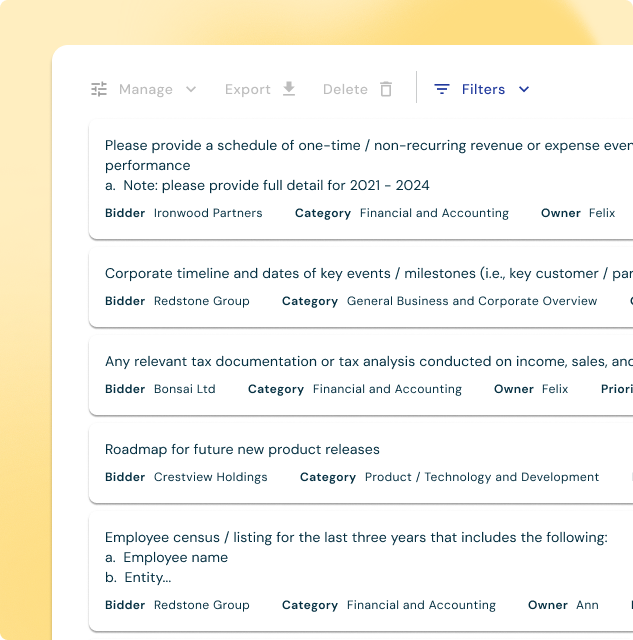
The data room opens.
Then the chaos begins.
In later-stage auctions, 3 to 5 bidders are each sending 200 to 2,000 questions. They arrive in different formats. Many are asking the same thing in different words. Prior answers that already address a question are buried somewhere in a spreadsheet from two weeks ago.
For the investment bank, every question flows through you. For the selling company, the answers have to come from your team, often during the busiest stretch of the deal. Everyone needs consistency across bidders, visibility into what's been answered, and a way to stop duplicating effort.
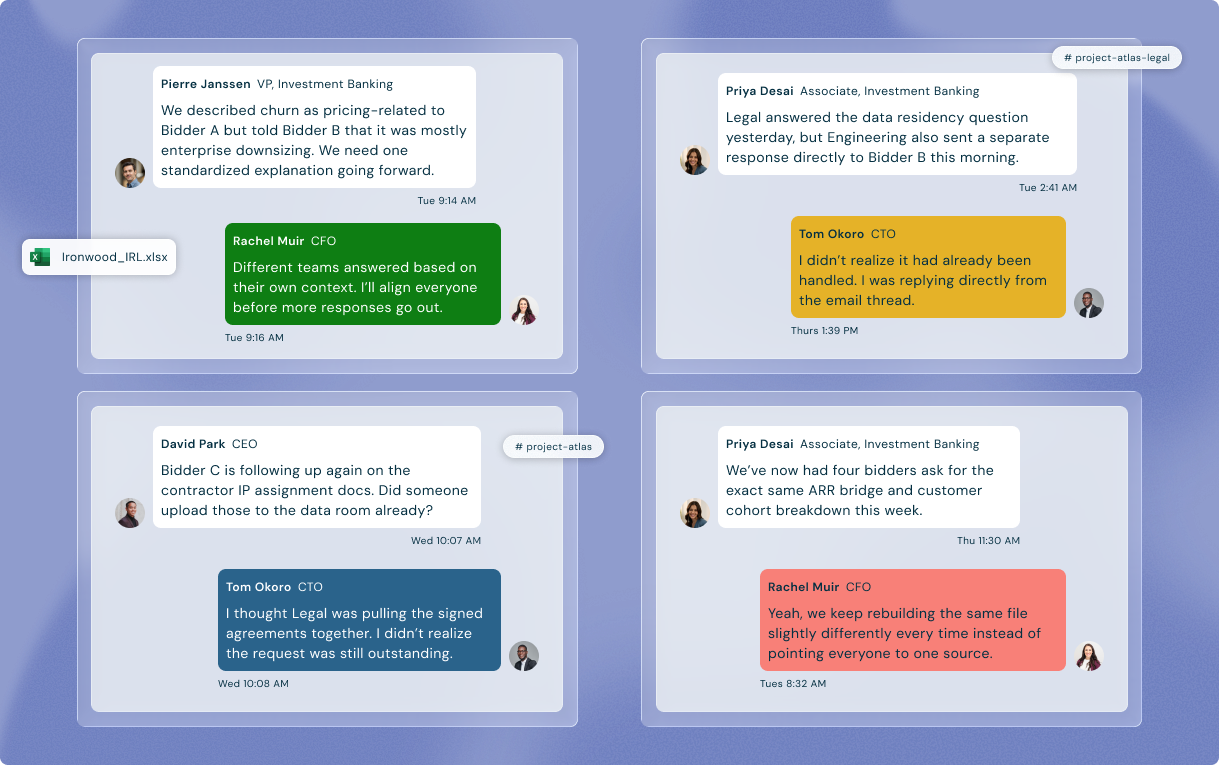
The volume problem
3 bidders × 600 questions each = 1,800 questions to track, answer, and manage. Many overlap. Some are identical. All need consistent answers.
The prior-answer problem
Bidder C asks something you answered for Bidder A three weeks ago. But it can be hard to remember that you even answered a similar question before, let alone find what you said back then.
The consistency problem
The same question asked by three different bidders should get the same answer. Without a system, inconsistencies are easy to miss, and discrepancies create risk.
The collaboration problem
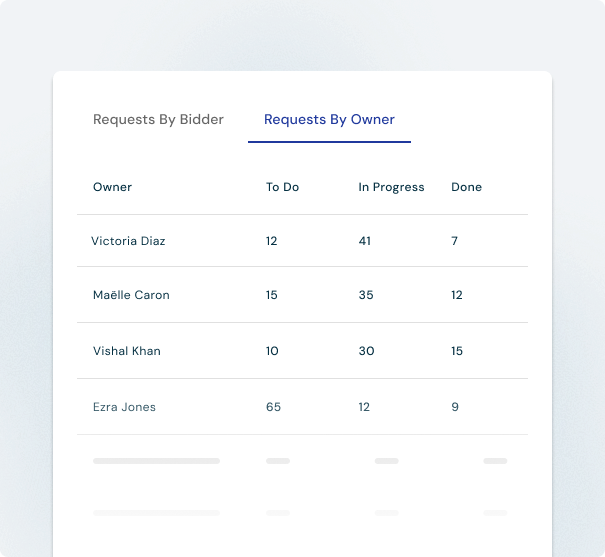
The bank sends a spreadsheet to the company. The company works on it, but nobody can see progress in real time. Questions get triaged to legal, finance, HR, and the CEO. Tracking who owns what, and what's done, is a job in itself.
What people are saying
What Zuva Sell-Side Does
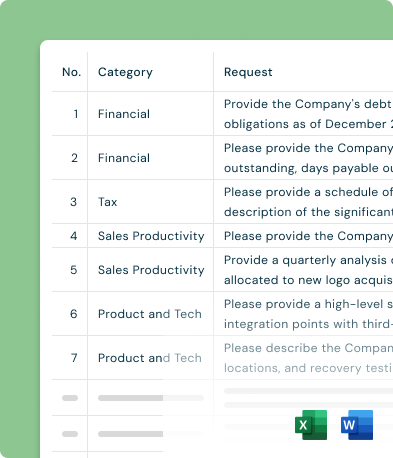
Import bidder questions
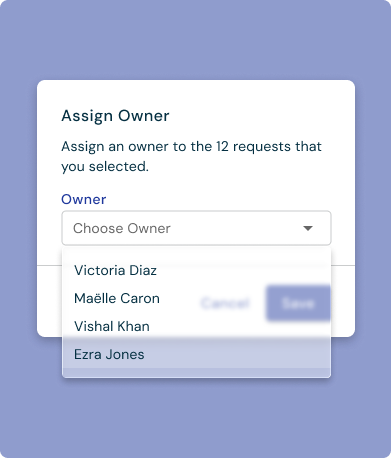
Manage requests
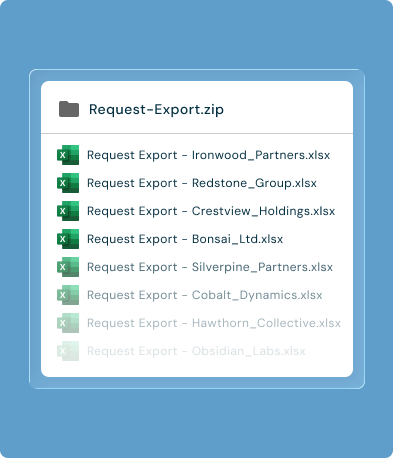
Export in consistent, customizable format for sharing with bidders
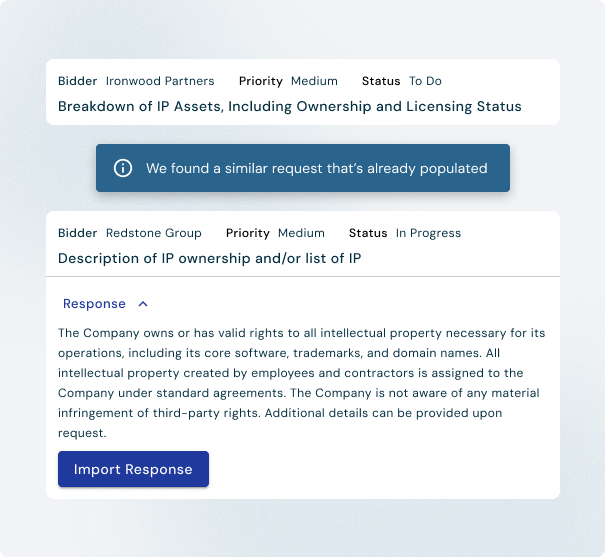
Reuse Prior Answers Automatically
Instead of searching across spreadsheets to see if you've answered a similar request before, Sell-Side surfaces it for you. The product detects similar requests and flags responses that have already been provided, so you can reuse what you've already done. Final edits stay in your control. Sell-Side just reduces the time spent hunting for precedent.
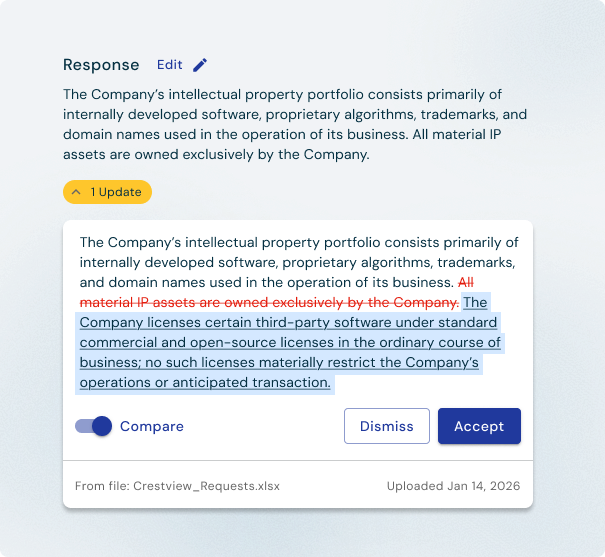
Instantly See What Changed
When a request tracker exported from Sell-Side is re-imported with updates, Sell-Side detects what changed and routes those items into a review queue. Instead of combing through Excel to figure out which request properties were modified, you can focus on incorporating updates and maintaining a single source of truth.
Built for How Teams Already Work
Import request lists in Word or Excel, assign owners by workstream, collaborate on responses, and track progress in one place. When request list updates need to go back to bidders, export to Excel in a standardized format customized to your template. Sell-Side reduces reconciliation work without forcing a new process.